Meet Tuva: Kinda.'s Sustainability Placement Student from Sweden
Over the past few months, Kinda. has had the pleasure of hosting Tuva, a UTAS exchange student from Sweden, as our sustainability placement student across Kinda.evolve and Kinda.futures. Tuva sat down with me for a chat about what drew her to Kinda., how sustainability looks different on the other side of the world, and what she's learned that no lecture theatre could teach her.
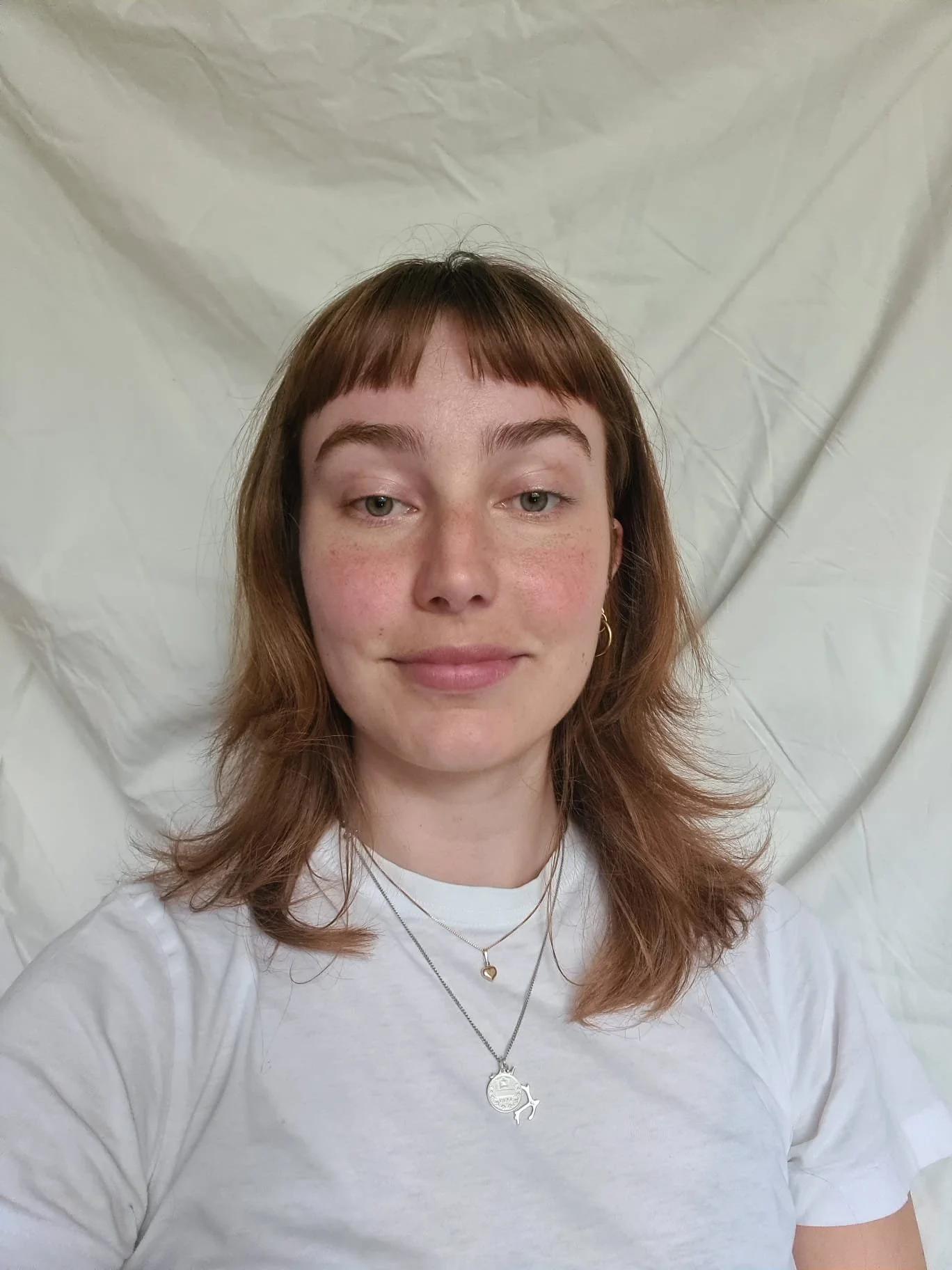
Our wonderful Sustainability Placement Student, Tuva.
Here's our conversation, lightly edited for length.
What drew you to a placement with Kinda. rather than a more traditional sustainability or design placement, and what made you choose to do it on the other side of the world from home?
When James told me about Kinda., what really caught my attention was the holistic approach. I hadn't had much experience of that before. The focus on customer wellbeing, really wanting to work with the customer to make the change, and the amount of local and community focus, these are things I haven't worked much with in sustainability at home. In Sweden, sustainability tends to be separated into different categories, and the word itself is often used primarily as an environmental term, with less focus on the social and economic side.
It was also just about getting some hands-on experience and exploring what sustainability work looks like around the world. What are the similarities and differences, and what local adaptations make it suitable for here that I might do differently back home.
What did you expect this placement to involve, and how has that matched or differed from reality so far?
I came into it very open for the experience. I wanted to absorb as much as I could and widen my perspective, and learn more about how you work with social sustainability, or run a sustainability consultancy, since I had no experience of that either. I think we've done exactly that. I've gotten a better understanding and a peek into your everyday work, and it's been super interesting. I especially learned about the importance of listening, and inspiring participants to be interested in the journey themselves, and making it accessible for them to become more sustainability friendly.
Walk me through a typical week for you at the moment. What does the work actually look like day to day, including your other studies at UTAS?
On Mondays I don't have any lectures, so it's independent work. I meet up with a friend and we study and do lab reports and workshop things, and we have a tradition of grabbing banana bread from different cafes and ranking which one is best. There's so much banana bread here. Not so much in Sweden.
Tuesdays I study Fauna Tasmania, which is fascinating since I've done biology before. Wednesdays is Marine Resource Management, an area I've always been interested in but haven't had much access to in the north of Sweden, especially fisheries and how to make those communities sustainable. Fridays is Indigenous Life Worlds, which might be my most interesting unit here. I've never done social science before, and I can relate a lot of what I'm learning back to our own Sami people at home. There are similar patterns, and it's been a lot of reflecting.
Stepping outside of the work itself, how does everyday life in Tasmania compare to home in Sweden? What has felt familiar, and what's felt completely different?
It feels super different but also pretty similar in a way. Here I live on campus in dorm life, which isn't something I did back home, but it's a lot of fun living close to other exchange students. You can just go over for a movie night, and the friendships are really accessible. We also try to explore the city more here, eating out maybe once a week, which I wouldn't do back home because it's expensive. I try to fit in some climbing and get out of the city on weekends when I can. Less routine, more spontaneous. Someone says do you want to go do this, and you just go. Though of course it also means less time with my partner and family back home.
How does sustainability show up in daily life in Sweden compared to what you've seen here in lutruwita/Tasmania?
In Sweden I bike a lot. Here I don't have a bike, and it's a lot hillier, so I take the bus or a car. I also thought about food. My partner is a recreational fisher in Sweden, so we eat a bit of his fish, and meat in general is often very locally produced there. Here you have these local vegetable markets running all year round, whereas back home it's really only in the summer because you can't garden through winter.
I also thought about social sustainability. We have a lot of government funding for people experiencing hardship in Sweden, and it's also too cold for people to be outside much, so you don't encounter homelessness in the same way I do here. Energy efficiency is probably the thing I've thought about the most. The houses here aren't very energy efficient, and that was a bit of a culture shock. It's not even that cold outside, but when it's cold inside too, you feel it faster.
Is regenerative design something that's talked about or practiced back home, and how does that compare to what you've encountered through Kinda.?
I've mostly encountered this regenerative approach in a monitoring or biology context in my sustainability studies, used for evaluation and action but not with a focus on people and community. Some Swedish companies I've come across have the first seed of it, but it's not the focus or the foundation of the company the way it is with Kinda. I haven't seen that before. A lot of them take quite a technical approach and don't focus as much on the person, the customer.
Kinda.'s approach is about changing people's ways of doing things and making it an easier way in, rather than bombarding people with so much information that they get overwhelmed and think it's too hard.
What's something you've learned here that you don't think you'd have picked up in a lecture theatre?
Placement is always more practical than anything you learn at the school bench, and that's an important thing to experience. At school you learn a lot of theory, you learn to question everything and dig deeper, but you don't always understand how that actually looks in practice once you have your degree. I had no idea what sustainability work actually looked like day to day. With Kinda. especially, I finally understood that it's possible to work with all these different kinds of sustainability at the same time. Other companies tend to be more technically focused, keeping to their area of expertise, but I think we need to work with everything to be able to solve this. That holistic approach feels like the best way forward, especially if you want to work at the grassroots local level. Working with Kinda. showed me that's possible, and what it can actually look like.
Finally, if you had to describe Kinda. in one sentence to someone who had never heard of it, what would you say?
Kinda. is a holistically, locally focused sustainability consultancy with their heart in the right place.
We couldn't have put it better ourselves. Thank you, Tuva, for your curiosity, your reflections, and for bringing a Swedish lens to everything we do at Kinda.
Small steps. Big ripples, wherever you're standing in the world.