What happens when you stop mowing?
Lars Roberts has spent years watching European green spaces do something Australian councils rarely bother to do: leave things alone.
In parks across the UK, Germany, and Scandinavia, large areas of grass are mown at most once or twice a year. The result is wildflower meadows, buzzing with insect life, sitting comfortably alongside tidy paths and manicured edges. Beautiful, practical, and teeming with biodiversity.
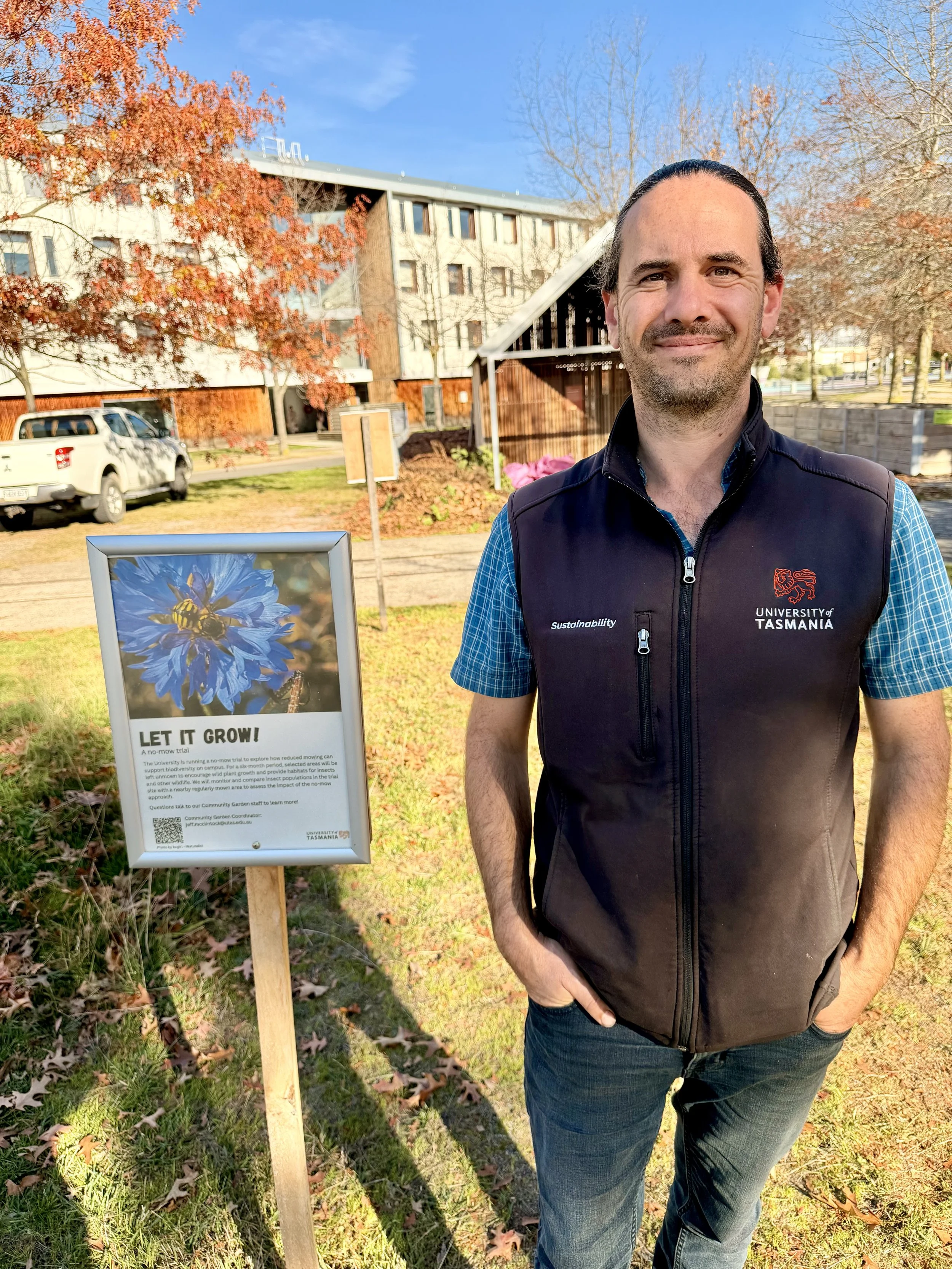
Lars Roberts, Biodiversity and Gardening Officer.
Beside the Let It Grow trial site.
Lars brought that idea home to the UTAS Inveresk campus. The result is Let It Grow, a trial that's quietly transforming how we think about the lawns under our feet.
So, what is Let It Grow?
Let It Grow is about shifting the way we manage green space, not abandoning it. It's part of UTAS's commitment to becoming a Nature Positive University and sits at the heart of their incoming Grounds and Biodiversity Action Plan (GBAP). The idea is simple: by mowing less and leaving more habitat, we give insects and other species a fighting chance.
At Inveresk, the trial is run in collaboration among the grounds crew, sustainability staff, students, and academics. That mix matters. It creates opportunities for real citizen science, biodiversity monitoring, and learning that happens outside the lecture theatre.
What does a 5x increase in insect species actually look like?
Lars has one word for it: complexity.
"Walk past an area that hasn't been mown, and you'll notice the plant species are more varied. The way they're growing, their height, the structure, it's all different. You might see flower heads depending on the time of year."
The insects are harder to spot at first. But when Lars and his team swept through the unmown areas and stopped to look at what they'd collected, the results were staggering.
"It was mind-boggling."
Why are Australians so attached to the tidy lawn?
It's a fair question. Lars puts it down to cultural lag.
Australia has long looked to Europe and North America for guidance on how to do things, including managing green space. The shift toward biodiversity-conscious land management has been underway overseas for decades. Here, we're catching up. Slowly.
But there's a personal cost too, one we don't often think about. Every Saturday spent mowing is a Saturday not spent in the park with your kids. The lawn, Lars points out, can affect our own mental and social lives when it becomes something we're obligated to maintain rather than enjoy.
And then there's the environmental cost. Regular mowing removes an important habitat and food source for insects. Those insects have the potential to keep other insect populations in check, which means letting them thrive can actually reduce the need for pest control down the track.
What about the 80% organic target?
UTAS has set a target of 80% organically managed grounds by 2030. A lot of their land is already managed that way, though tracking it across more than 800 hectares is a challenge in itself.
The good news: organic trials are showing promising results, and Lars is confident they'll get there. Reduced mowing is part of that picture.
What would a nature-positive Launceston actually look like?
Lars describes nature-positive as a way of stepping back and think critically about how our actions ripple through food chains and ecosystems. It means accounting for what we do and what effect it has on all life, not just human life.
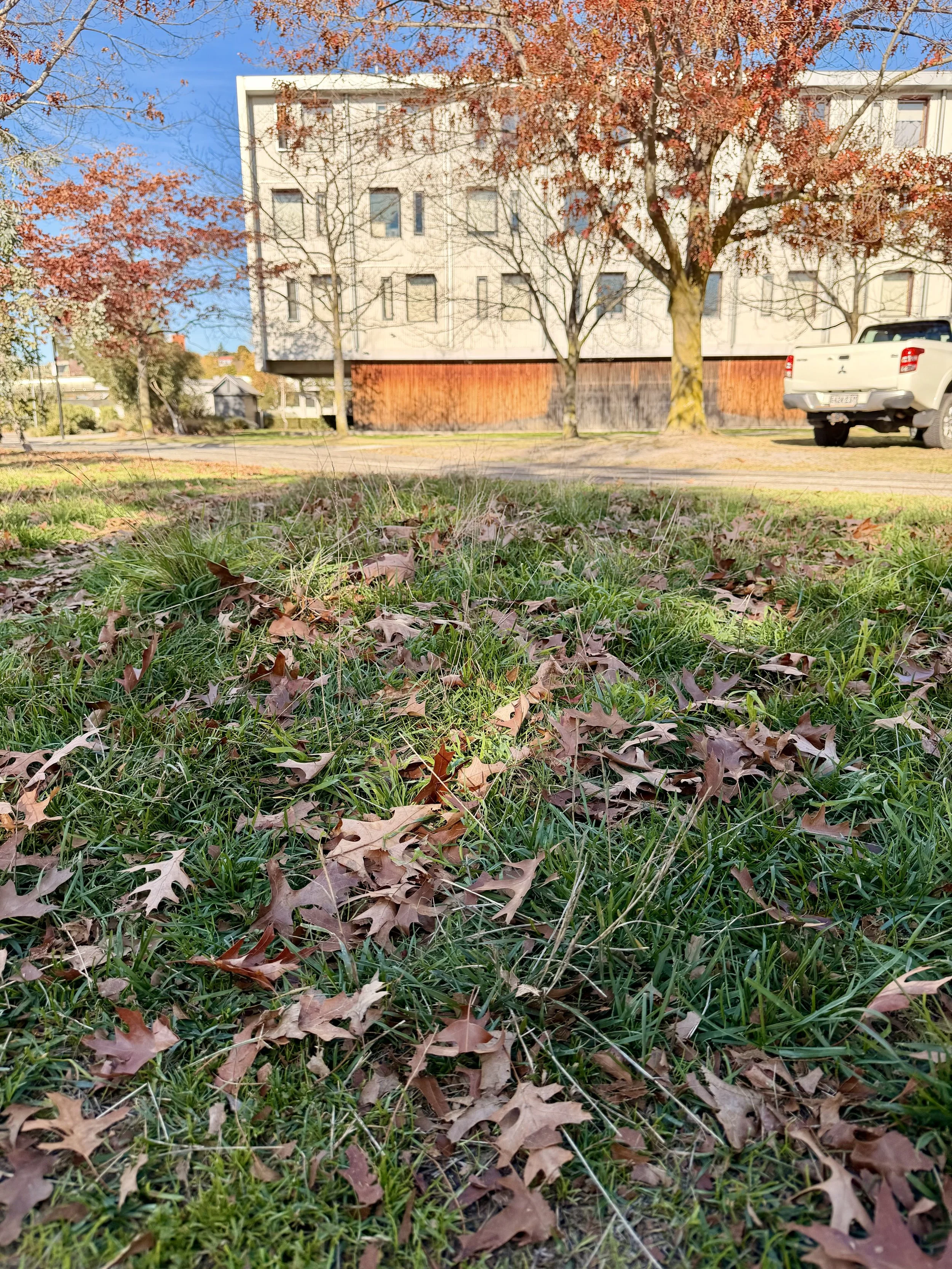
The Let It Grow trial area at UTAS Inveresk.
Less mowing, more life.
One of the simplest starting points? Mow less. Mow higher. Leave unmown islands in your lawn. He points to European green spaces as proof that it's possible to manage land with biodiversity at the centre, without sacrificing beauty or function. We don't have to look far for the template. We just have to be willing to try it here.
The smallest thing you can do this weekend
Sit in a chair. Make a cup of tea. Watch your lawn for five minutes.
"We tend not to think about insects because they're so small and difficult to see. But by slowing down, you'll be surprised how many you can spot."
If you want to take it further, try iNaturalist. Take a photo, upload it, and let the community help you identify what you've found. You don't need to know what something is to submit it. Just put 'plant' or 'animal' and go from there. New species, including pest species not previously recorded in Tasmania, have been discovered this way.
What about snakes, fire hazards, and general untidiness?
These are the four concerns Lars hears most often: weeds, snakes, fire risk, and mess. He takes each one seriously.
Weeds: Let It Grow doesn't mean ignoring your garden. If a blackberry plant pops up, remove it. Mow a border if you're next to a high conservation area.
Snakes and ticks: context matters. If you're near a reserve, be aware and mow clear paths where needed. But don't assume they'll appear just because conditions might suit them.
Fire: a genuine concern, and one to manage carefully. Keep borders mown, especially near structures. If the area dries out, mow at a higher height rather than leaving it.
Untidiness: this one's a matter of perspective. An unmown lawn can range from a single grass species to a diverse meadow full of flowers. Kew Gardens in London has swathes of unmown space that blend seamlessly with their manicured surrounds. Mow shapes into it. Plant new things. Let it find its form.
"I agree that an unmown area can look untidy. But if you fill it with flowers, there's real beauty in it."
Come and see it for yourself.
Lars Roberts is a contributor at Kinda.forward: Small Steps to Sustainability on Saturday 27 June at UTAS Inveresk, Launceston. Come for his Let It Grow micro-talk, a garden walk, and a composting workshop with Jeff McClintock. It's free, it's open to everyone, and it might just change the way you look at your lawn.
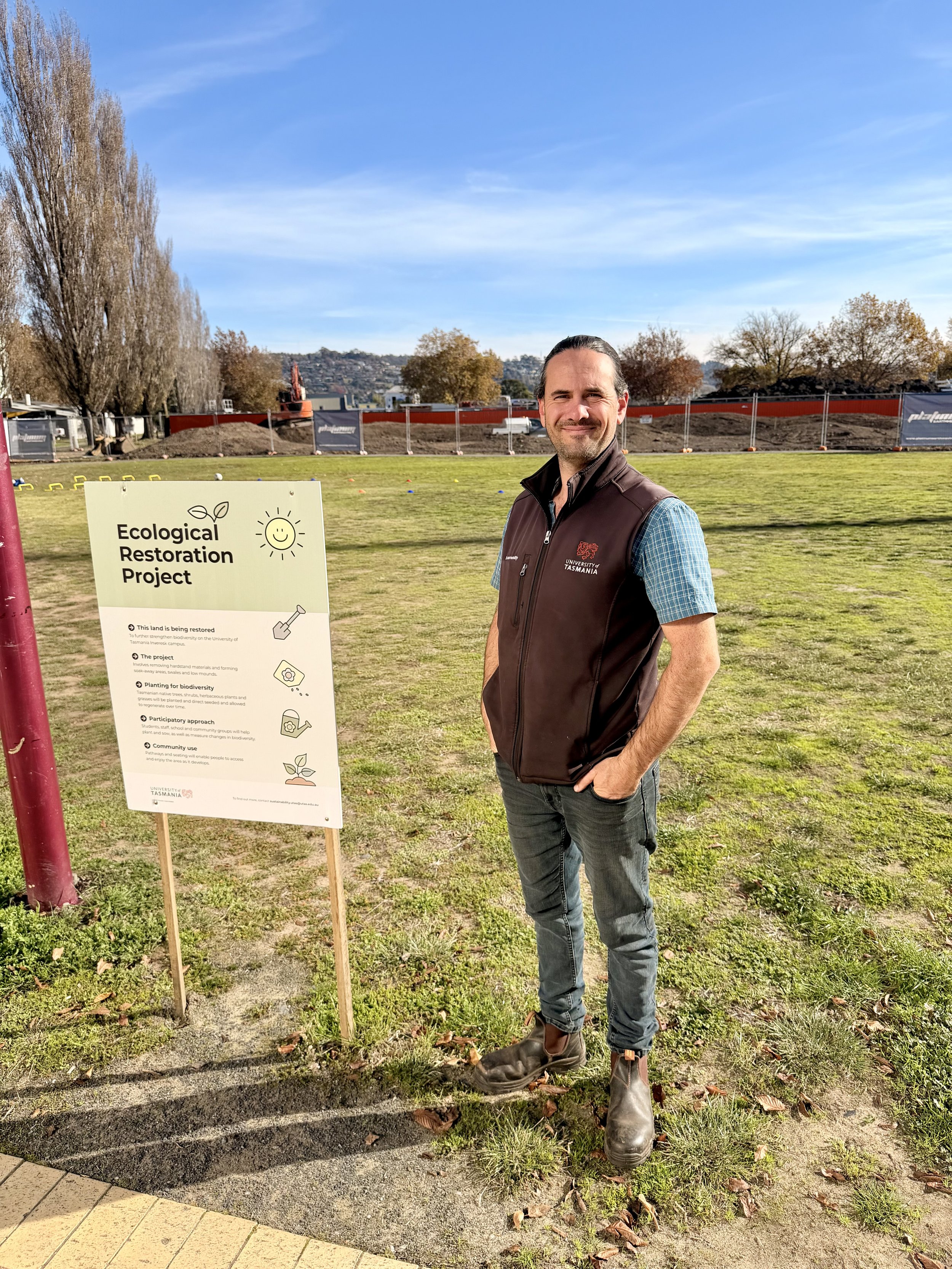
One of several active restoration projects underway at the Inveresk campus.
Tickets available at wearekinda.com.au/kindaforward
Kinda.forward: Small Steps to Sustainability
Saturday 27 June 2026 · 10am to 4pm · UTAS Inveresk Campus, Launceston · Free entry